

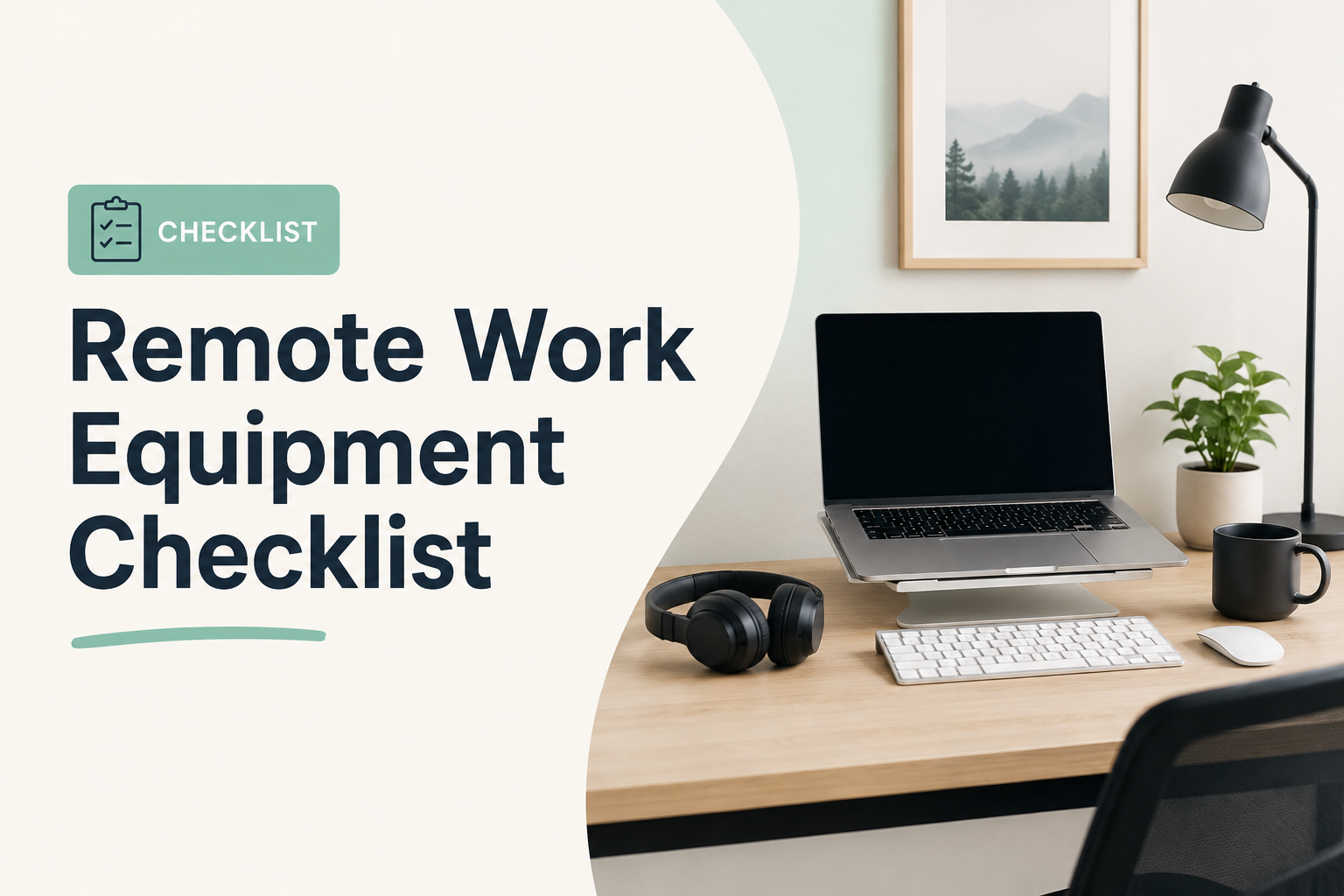
The first time I watched a “remote work setup tour” on YouTube, I felt sick.
There was a woman in California with three monitors, a standing desk, a noise-cancelling headset, and a chair that probably cost more than my entire apartment rent for a year.
I closed the video and didn’t apply for any remote jobs for another two weeks.
I thought: “If that’s what success looks like, I cannot afford to even start.”
That was a mistake. A costly one.
After two years of working remotely for US and European companies — sometimes from my bedroom, sometimes from a café, sometimes from my cousin’s house when NEPA took light for three days — I have learned something important:
Remote work equipment does not need to be impressive. It needs to be reliable enough.
Below is the exact checklist of what you actually need, what you can skip, and how to get everything for under ₦150,000 in Nigeria today.
The Minimum Viable Setup (What You Actually Need)
Let me be clear: This is not a “dream setup.” This is a “get hired and start earning” setup. You can upgrade later with your first paycheck.
| Item | Why You Need It | Minimum Acceptable Spec | Estimated Cost (Used/Refurbished) |
|---|---|---|---|
| Laptop or Computer | Your primary work tool | 4GB RAM, 128GB storage, Windows 10 or ChromeOS | ₦80,000–₦120,000 |
| Smartphone (you probably already have this) | Backup internet hotspot, 2FA authentication | Any Android or iPhone from the last 5 years | ₦0 (already own) |
| Earbuds or Headphones (basic) | Video calls, focus in noisy environments | Any working earbuds with a mic | ₦5,000–₦10,000 |
| Light Source (lamp or good window) | Video interviews (you need to be seen clearly) | Any desk lamp or bright window | ₦0–₦3,000 |
| Total Minimum | ₦85,000–₦133,000 |
That is it. No standing desk. No second monitor. No noise-cancelling miracle headset.
Where to Buy in Nigeria (Without Getting Scammed)
I have bought used laptops from three different markets in Lagos. I have been sold a “like new” laptop that died after one week. I have also found absolute gems.
Read also: 5 biggest remote job myths
Here is what I learned:
Best options for used/refurbished equipment:
| Option | Best For | Risk Level |
|---|---|---|
| Jiji.ng (verified sellers only) | Laptops under ₦100k | Medium (check seller rating) |
| Slot.ng (refurbished section) | Warranty-backed devices | Low (but more expensive) |
| Computer Village, Lagos (if you are in Lagos) | Bargaining power | High (need technical knowledge) |
| Facebook Marketplace (local groups) | Rare deals | High (meet in person only) |
| A trusted friend or family member upgrading their device | Safest option | Very low |
My personal rule: Never buy a used laptop without seeing it turn on, connecting to WiFi, and opening a browser. If the seller refuses a live demo, walk away.
What You Can Skip (Do Not Waste Money on These)
Remote work “influencers” will try to convince you that you need these things. You do not.
| Item | Why It Is Pushed | Why You Can Skip It |
|---|---|---|
| Second monitor | Looks impressive on video | One laptop screen is fine. Use Alt+Tab. |
| Ergonomic chair | Comfort marketing | Sit on a dining chair with a cushion. |
| Noise-cancelling headphones | Brand deals | Basic earbuds work. Mute yourself when not speaking. |
| UPS (Uninterruptible Power Supply) | Fear of NEPA | Use your phone hotspot + laptop battery. |
| External webcam | “Professional look” | Your laptop’s built-in camera is fine. |
I worked for 14 months without a single item on that “skip” list. I still got paid. I still got promoted. My clients never once asked what chair I was sitting in.
How to Handle NEPA and Internet (The Real Nigerian Challenge)
Let us be honest: The biggest equipment challenge in Nigeria is not the laptop. It is the light and the internet.
Here is what actually works, not what looks good on paper.
For NEPA (power cuts):
| Your Situation | What to Do | Cost |
|---|---|---|
| You have a laptop (battery lasts 2+ hours) | Use laptop battery + phone hotspot for short outages | ₦0 |
| Outages last 4+ hours regularly | Buy a small power bank (20,000mAh) for your phone. Work from your phone for urgent tasks. | ₦15,000–₦25,000 |
| You need 8+ hours of continuous power | This is expensive (inverter + battery = ₦200k+). Instead, find a coworking space or café with backup power. Pay daily. | ₦1,000–₦3,000 per day |
For internet:
| Your Situation | Best Option | Monthly Cost |
|---|---|---|
| Good 4G coverage in your area | MTN or Glo data plan (buy the 30-day package, not daily) | ₦10,000–₦15,000 |
| Poor network at home | Find a nearby café, library, or coworking space with reliable WiFi. Work there. | ₦500–₦2,000 per day |
| You do video calls daily | Starlink (expensive but reliable) OR use 4G + keep video off unless speaking | ₦40,000+ (Starlink) or ₦15,000 (4G) |
Real talk: I have done client video calls from a car parked outside a café because the café was closed. I have submitted urgent files using a phone hotspot at 2am. It is not glamorous. But it works.
Upgrade Path: What to Buy with Your First Paycheck
Once you receive your first payment (let us say $500–$1,000), upgrade in this order. Do not buy random things.
| Priority | Item | Why | Estimated Cost |
|---|---|---|---|
| 1 | Better laptop (8GB RAM, SSD) | Speed = more work done = more money | ₦150,000–₦250,000 |
| 2 | Reliable power solution (small inverter or large power bank for laptop) | Less stress during NEPA | ₦80,000–₦150,000 |
| 3 | A second phone line (different network) | Backup internet when one network fails | ₦30,000–₦50,000 (phone) + data |
| 4 | Comfortable chair (only if you have back pain) | Health matters | ₦50,000–₦100,000 |
Notice that a second monitor and noise-cancelling headphones are not on this list. They never will be.
Real Example: How I Started (And What I Use Now)
When I started (2024):
- Laptop: 2018 HP with cracked screen (free from a cousin who was upgrading)
- Internet: MTN 4G on my phone (₦10,000/month)
- Power: Laptop battery + prayer
- Workspace: My bedroom bed (terrible for posture, but it worked)
Monthly earnings then: $0 for 3 months, then $400, then $800
What I use now (2026):
- Laptop: Refurbished Lenovo ThinkPad (₦220,000 — bought with my 3rd paycheck)
- Internet: Starlink (expensive, but I split it with two neighbors)
- Power: Small inverter (₦120,000 — bought after 6 months)
- Workspace: A proper desk and a ₦45,000 chair
Monthly earnings now: $2,500–$3,800
The equipment did not make me better. The consistency did. The equipment just made it easier to be consistent.
Your Equipment Action Plan (This Week)
| Day | Task |
|---|---|
| Day 1 | Inventory what you already own (laptop, phone, earbuds, lamp). Write it down. |
| Day 2 | Test your laptop battery. How long does it last unplugged? If under 1 hour, plan to stay plugged in. |
| Day 3 | Identify your backup internet source (neighbor, café, second SIM, or hotspot). |
| Day 4 | If you need to buy anything from the minimum checklist, search Jiji or ask friends. Do not rush. |
| Day 5 | Set up a clean, quiet corner in your home. Even a table pushed against a wall is fine. |
| Day 6 | Apply for one remote job. Do not wait until your setup is “perfect.” It will never be perfect. |
The Truth No One Tells You
Your equipment is not what will get you hired.
Your skills, your communication, and your persistence are what will get you hired.
I have seen someone with a ₦3 million setup get rejected from every job because they could not write a clear email. I have seen someone working from a phone in a shared apartment get hired because they showed up on time and did what they promised.
The best equipment in the world cannot fix a lack of follow-through.
And the worst equipment in the world cannot stop someone who refuses to quit.
P.S. — This checklist is based on prices and availability in Nigeria as of June 2026. If you are reading this later and something has changed (like laptop prices or data costs), let me know and I will update it.
— Gabriel, Seekersnews


GIPHY App Key not set. Please check settings